Case study 01 · AI-enabled product building
Raydr
Every gig, club night and festival in Portugal, in one place.
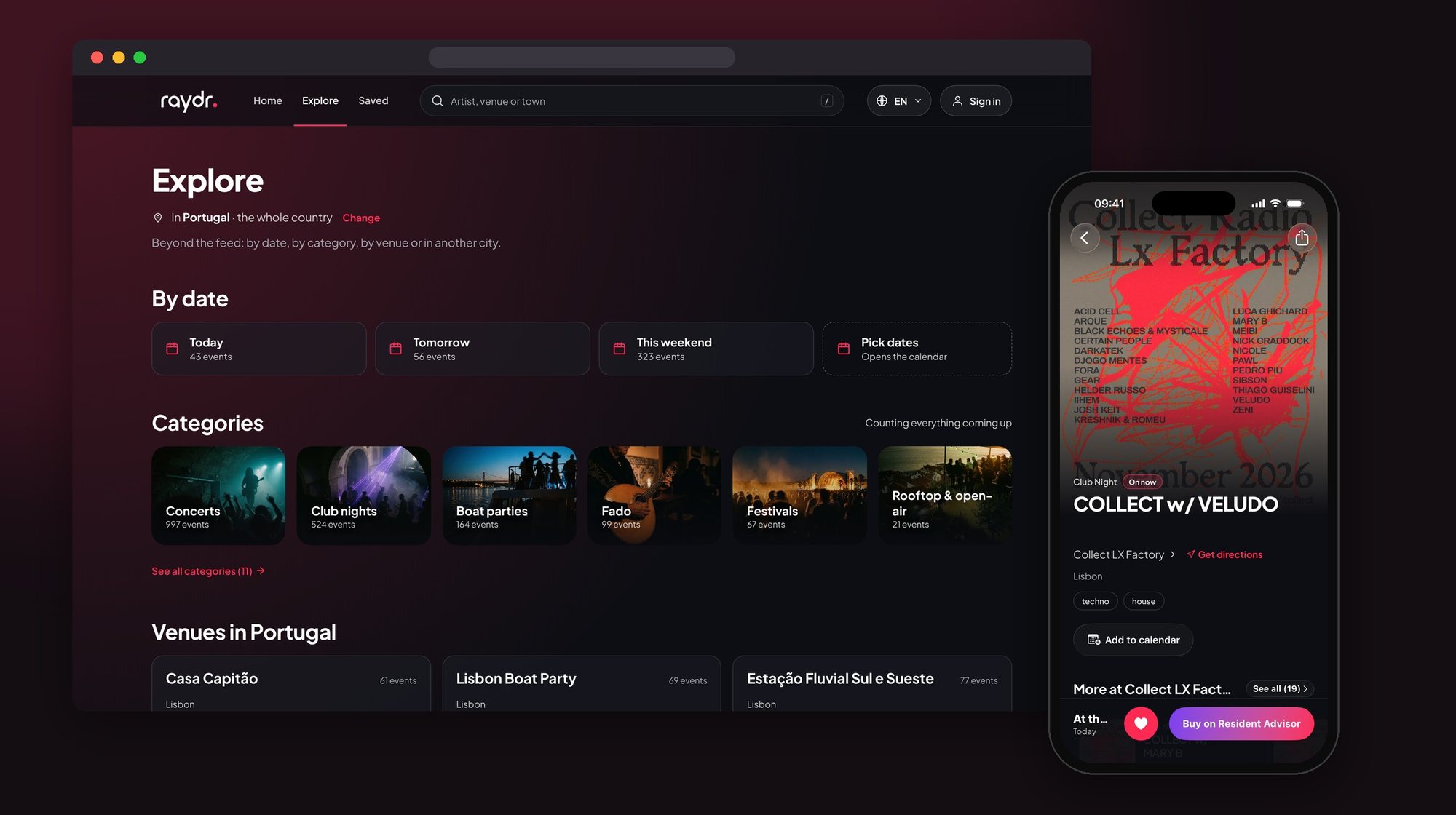
The problem
Nights out are scattered across a dozen ticket sellers.
Gigs, club nights and festivals in Portugal are listed on Resident Advisor, Shotgun, Fever, BOL, Ticketline, Eventbrite and promoters' own pages. To answer one simple question you had to check them all.
The goal
Own one question: what's on tonight?
One feed that pulls every source together, then sends people to the original seller to buy. Raydr aggregates; it doesn't sell tickets.
My role
I co-founded Workchop and built its first product, from concept to launch on the web, iOS and Android. I led product strategy, UX/UI, product architecture and the AI-assisted development, collaborating with my co-founder on visual refinement and the design system implementation.
Key decisions
Five decisions that shaped Raydr
- 01
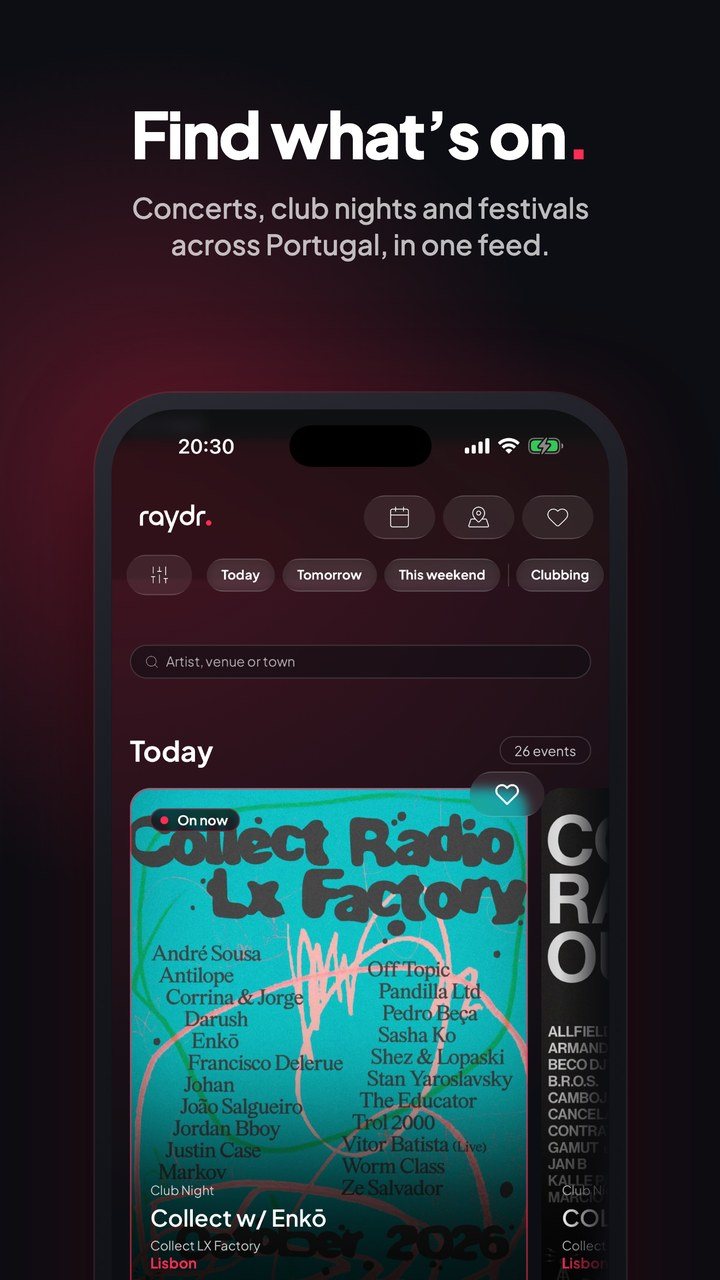
Today leads the feed
Tonight is the question, so today's events always come first.
- 02
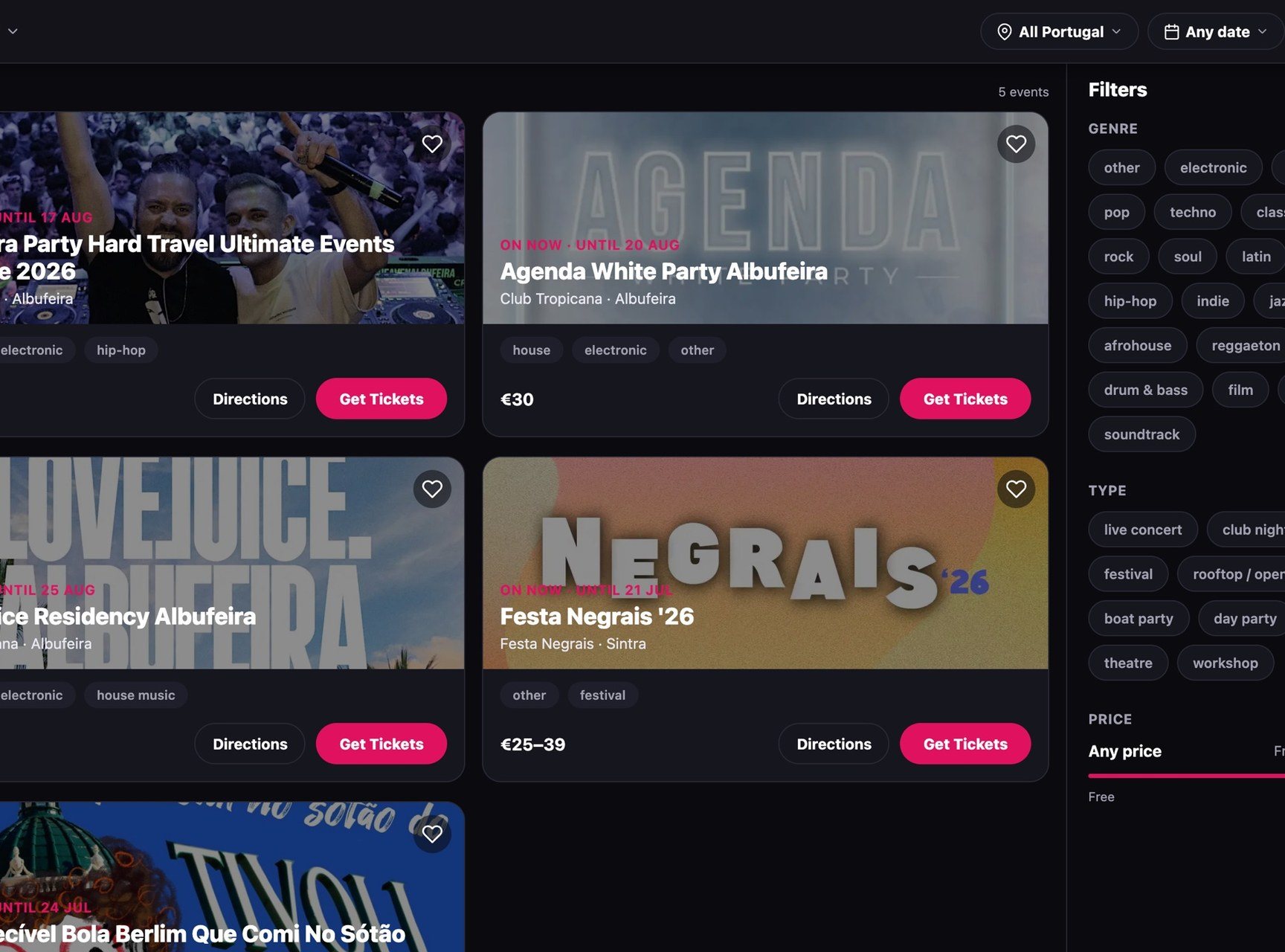
Filters follow real choices
Genre, type, price, date and place, in the order people choose a night out.
- 03
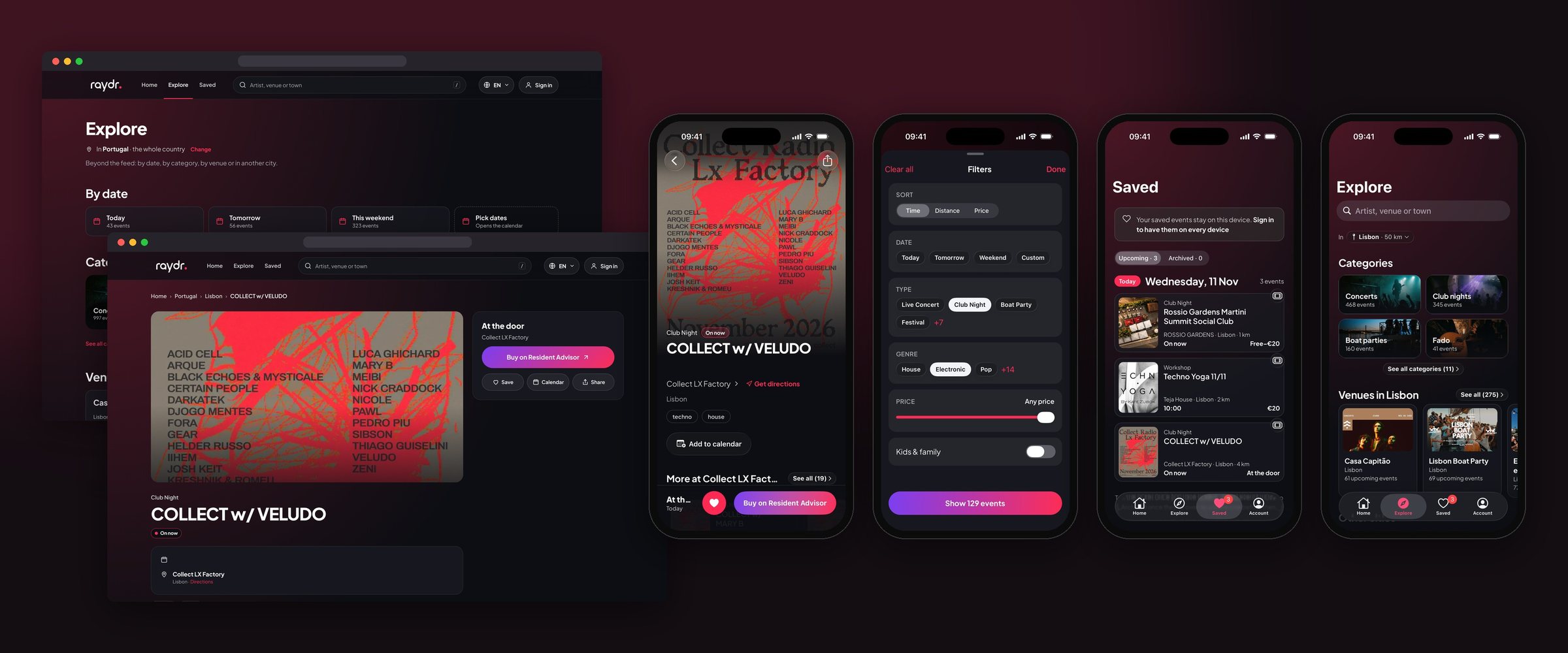
Saving builds a shortlist
One tap saves an event, so planning with friends starts from a list.
- 04
Send people to the source
No checkout of our own. Buying stays with the official seller, and affiliate links can fund Raydr.
- 05
Web first, one brand
The website ships first; iOS and Android share features and tokens, not screens.
How it's built
AI does the reading, so Raydr scales without brittle scrapers.
01 Scrape
Playwright renders each seller's page and keeps the text, not fragile CSS selectors.
02 Parse
Gemini turns the text into structured events against a strict JSON schema.
03 Deduplicate
The same event on two sellers is matched by venue and time; festival passes merge into one event.
04 Ship
Supabase, one Expo app for web, Android and iOS, Vercel, and scheduled jobs with Sentry alerts.
Screens
Next case study
Oathsteel + Conjure →